Mold DYNAMIC
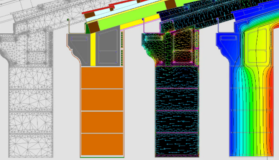
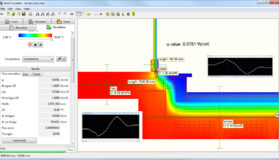
2D or 3D finite element software for calculating Thermal Bridges in variable or stationary regime (validated ISO 10211) and condensation/mold risk verification according to UNI EN ISO 13788 and EN ISO 13786
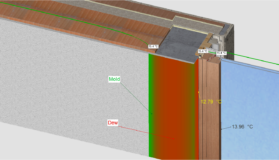
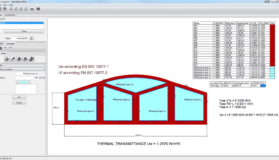
MoldDYNAMIC 6 includes the parametric thermal bridge BRIDGE GENERATOR that allows the creation of thermal bridges and connection with the EC700 Edilclima software.
Price range: €1.350,00 through €3.490,00 +vat
MOLD SIMULATOR DYNAMIC
Thermal Bridge and Condensation Analysis in Variable Temperatures
is a two-dimensional or three-dimensional finite element (FEA) modeler for dynamic and steady-state thermal calculations of building structures, thermal bridges, and for analyzing the risk of surface and interstitial condensation in variable temperature conditions of walls, floors, roofs, and other building structures.
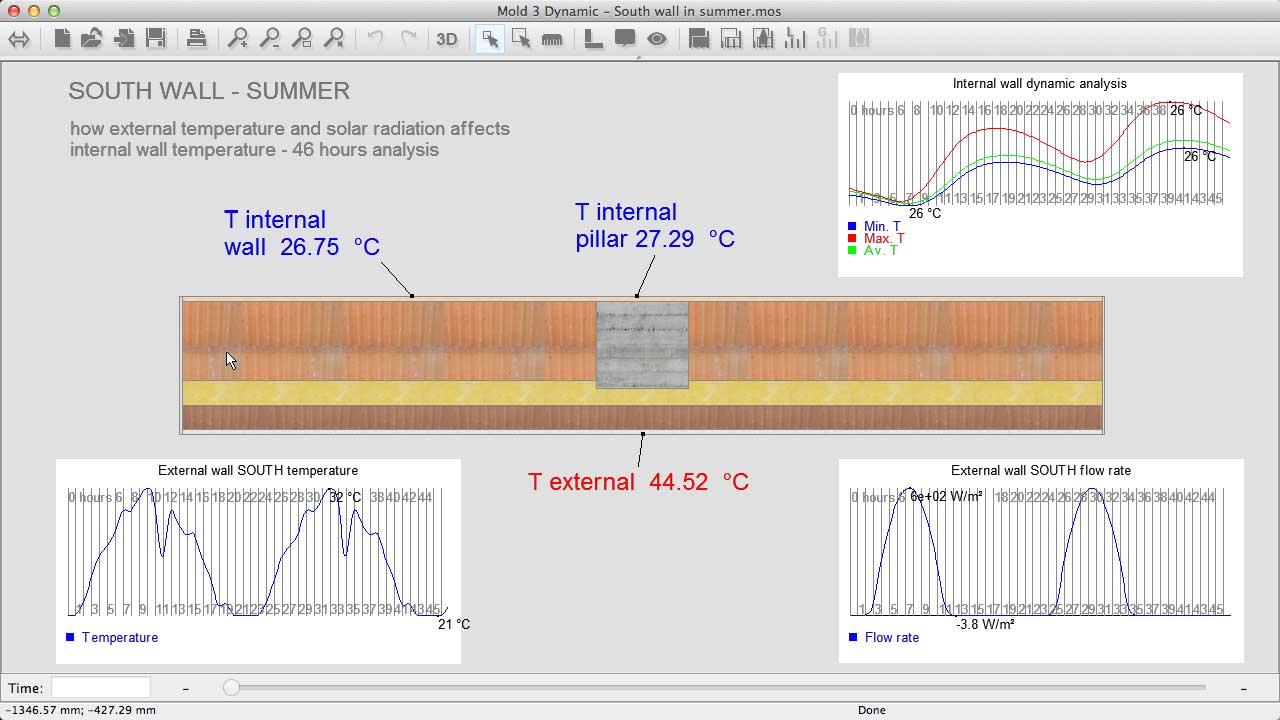
old DYNAMIC allows you to perform simulations with time-varying input parameters. You can assign time-dependent curves of temperature, humidity, and thermal flow to the structure’s boundaries (for example, solar radiation on a wall or thermal flow in a radiant system). The curves can be created using the program’s tools or imported from tabular data, such as climate data files.
Mold DYNAMIC performs a series of finite element analyses of the structure using successive points on the boundary condition curves and taking into account the results of the previous simulation. In this way, the actual trend of heat flow and temperature over time is simulated at every point of the structure. It is therefore possible to see, for example, the trend over time of the sections of the structure subject to mold or surface condensation as the temperature, humidity, and solar radiation on the walls vary. Or you can evaluate the temperature trend on the surface of a wall or radiant floor during operation and during the system’s on and off cycles. Or perform the Glaser dynamic analysis instant by instant and calculate the volume of the condensate and the flash evaporated in any period of time.
Mold DYNAMIC also automatically performs additional finite element analyses with periodic input data to calculate all the dynamic characteristics of the complete structure according to the standard UNI EN ISO 13786, such as: Z heat transfer matrix, phase shift, attenuation, areal heat capacity, admittances, dynamic thermal transmittance, etc., necessary for summer calculation. It is important to emphasize that these values are measured on the actual structure under examination, including complex building components with thermal bridges, not just for homogeneous layer packages as is usually the case.
But that’s not all! With Mold DYNAMIC, you can also define the conductivity behavior of a material as the temperature changes or the temperature trend along a boundary.
VALIDATION
Mold Simulator was developed according to the following standards:
- EN ISO 6946 “Building components and elements – Thermal resistance and thermal transmittance – Calculation method”
- EN ISO 10211 “Thermal bridges in buildings – Thermal fluxes and surface temperatures – detailed calculations.”
- EN ISO 13788 “Hygrothermal performance of building components and elements. Internal surface temperature to avoid critical surface moisture and interstitial condensation.”
- EN ISO 13786 “Thermal performance of building components – Dynamic thermal characteristics – Methods of calculation.”